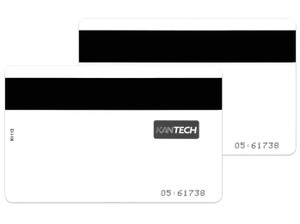
Kantech MFP-2KDYE-COM Dye Sublimation Composite Card
Overview
The Kantech MFP-2KDYE-COM is a specialized credential engineered for dye-sublimation printing in enterprise access control and identification systems. Built from a 40% polyester and 60% composite material blend, this card is designed to withstand both printing stresses and extended field deployment. If you operate a multi-facility credential issuance operation or need cards that survive moisture, physical wear, and UV exposure without fading, this material composition directly addresses those deployment realities.
Unlike standard PVC cards, the polyester-composite formulation resists humidity and temperature swings—critical when credentials spend time outdoors or in high-moisture environments like healthcare facilities, warehouses, or manufacturing floors. The surface finish is optimized specifically for dye-sublimation thermal transfer printing, ensuring vibrant color reproduction and crisp image detail across high-volume production batches without striping, color shift, or edge banding.
Key Features
- 40/60 Polyester-Composite Material Blend: This specific ratio balances printability with durability. Polyester content improves fade resistance and moisture resistance compared to pure PVC, extending credential lifespan in outdoor and high-humidity deployments. Composite materials provide structural integrity under repeated card-reader contact cycles.
- Optimized for Dye-Sublimation Printing: Surface characteristics are tuned for thermal transfer dye sublimation, not thermal transfer resin or direct thermal. This matters—using a card not optimized for your printer may cause color bleeding, insufficient ink adhesion, or premature surface wear. The MFP-2KDYE-COM ensures consistent color density and sharpness across batch runs.
- Fade and Moisture Resistance: Professional-grade formulation resists fading from sunlight, fluorescent lighting, and heat. Moisture resistance means credentials remain legible even after accidental spills, high-humidity storage, or outdoor weather exposure. This reduces credential replacement cycles and administrative overhead in high-turnover environments.
- Compatible with ioSmart Credential Ecosystems: Works within Kantech's ioSmart platform for integrated access control, visitor management, and multi-tenant deployments. If your organization already uses ioSmart readers, magnetic stripe encoding, or Kantech's credential management software, these cards integrate directly without workarounds.
- Consistent Quality Across Production Runs: Material uniformity and surface finish reduce batch-to-batch variation. For security integrators issuing thousands of credentials annually, this consistency eliminates reprints due to color mismatch, ink adhesion failures, or physical defects—saving time and material costs.
- Suitable for Indoor and Outdoor Applications: Whether deployed as facility badges, visitor credentials, or multi-site ID cards, the material handles both climate-controlled offices and outdoor access points. This versatility simplifies inventory management—one card type covers more use cases.
Integration and Compatibility
The MFP-2KDYE-COM (often searched as MFP 2KDYE COM) is engineered for Kantech ioSmart credential systems. Confirm compatibility with your specific printer model and encoding technology—dye-sublimation equipment, magnetic stripe encoders, smart card writers, and barcode printing hardware all have material requirements. If you are transitioning from standard PVC or polyester cards to this composite blend, perform a test batch with your existing equipment to verify optimal heat settings and ink transfer.
The card works with enterprise access control platforms that use credentials as the primary authentication token. Organizations deploying Kantech systems, visitor management workflows, or multi-facility badging should validate that their printer settings accommodate the composite material's thermal characteristics.
Application Scenarios
Deploy these cards in:
- Enterprise facilities requiring fade-resistant employee badges
- Healthcare environments where moisture and frequent badge scanning are unavoidable
- Warehouse and logistics operations with outdoor access gates
- Multi-site organizations issuing temporary visitor credentials at scale
- Government and institutional ID programs requiring long-term credential durability
- High-volume issuance operations where batch consistency reduces reprints
Frequently Asked Questions
Q: Can I use the MFP-2KDYE-COM in a standard PVC card printer?
A: The MFP-2KDYE-COM is optimized for dye-sublimation thermal transfer printing. It is not designed for direct thermal or resin-based thermal transfer printers. Verify your printer model supports dye-sublimation printing before ordering. If unsure, contact the printer manufacturer or your printer's documentation.
Q: How long do these cards last in outdoor deployments?
A: The polyester-composite blend resists fading and moisture damage significantly longer than standard PVC. Actual lifespan depends on sunlight intensity, temperature swings, and humidity in your specific location. In moderate outdoor environments (covered entryways, shaded access points), credentials typically remain legible for 3–5 years. Direct sun exposure will accelerate fade.
Q: Are these cards compatible with magnetic stripe encoding?
A: Yes. The MFP-2KDYE-COM works with magnetic stripe encoding as part of the ioSmart ecosystem. Ensure your encoding equipment is compatible with the composite material surface. Test a small batch with your encoder before large-scale production.
Q: What is the minimum order quantity?
A: Minimum order quantities vary by distributor and your specific configuration. Consult with your supplier for bulk pricing and lead times.
Q: Can I print on both sides of the card?
A: Yes, if your dye-sublimation printer has dual-side printing capability. The composite material surface accepts dye-sublimation ink on both sides without degradation. Verify your printer supports duplex printing in the hardware specifications.
Q: How should I store these cards before printing?
A: Store in a cool, dry environment (18–25°C / 64–77°F, 40–60% relative humidity). Keep cards in their original packaging to prevent dust accumulation and moisture absorption. Avoid direct sunlight and extreme temperature fluctuations.
Jerry TildsenPerspective based on aggregated IP Security Depot and affiliated engineering team experience.
The MFP-2KDYE-COM addresses a real pain point in multi-facility credential programs: card degradation in field deployment. The 40/60 polyester-composite blend isn't a marketing tweak—it's a material choice that directly impacts replacement rates and administrative cost. If you're currently replacing badges every 18–24 months due to fading or moisture damage, moving to this composite formulation can extend credential life to 4–5 years in moderate environments, reducing per-unit lifecycle cost and cutting down on reissue workflows.
Technical Highlights:
- Polyester Content (40%): Provides fade resistance to UV and fluorescent lighting that standard PVC cannot match. In healthcare facilities, warehouses, and outdoor access points, this translates to fewer illegible badges pulled from circulation.
- Composite Material Formulation (60% blend): Improves structural durability and moisture resistance without compromising dye-sublimation ink adhesion. The composite maintains surface integrity through repeated card-reader contact—magnetic stripe readers, chip readers, and barcode scanners all cause microscopic wear that can crack or flake standard PVC over time.
- Dye-Sublimation Optimization: The surface finish is tuned for thermal transfer dye sublimation specifically. Using non-optimized card stock with dye-sub printers often causes color banding, insufficient ink transfer, or premature surface cracking. The MFP-2KDYE-COM eliminates those reprints, saving time and material in high-volume issuance operations.
Deployment Considerations:
- Verify your dye-sublimation printer supports composite card media. Older or entry-level thermal transfer equipment may have heat calibration issues with materials other than standard PVC. Always run a test batch before committing to volume production.
- Storage matters: keep cards in a controlled humidity environment (40–60% RH). Moisture absorption into composite materials is lower than PVC, but prolonged exposure to high humidity (>70% RH) or temperature swings can still cause warping or ink adhesion problems down the line.
- If encoding magnetic stripe or smart chip data, confirm your encoder's platen pressure and heat settings are appropriate for composite materials. Excessive pressure can create stress fractures; insufficient heat can leave encoding unreliable.
The MFP-2KDYE-COM makes sense for integrators and enterprise IT teams running credential issuance operations with mixed indoor/outdoor deployment or high-volume visitor badging. If your current card replacement cycle is driven by fading, moisture ingress, or physical degradation—not lost or decommissioned credentials—this composite blend will reduce your operational overhead and improve security posture by extending credential legibility across the organization's full deployment lifecycle.