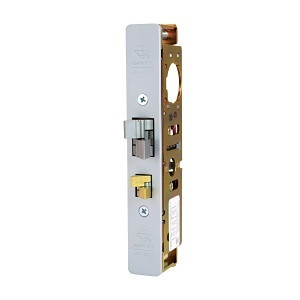
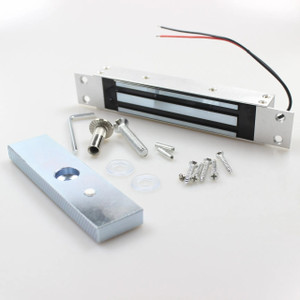
HES 4300-4M-201-628 Electromagnetic Deadbolt Access Control Lock
The HES 4300-4M-201-628 is an electromagnetic deadbolt lock designed for door access control in commercial facilities. Operating at 16VDC, it integrates directly into standard access control architectures—card readers, keypads, intercoms, and integrated building management systems. The electromagnetic strike mechanism provides fail-safe or fail-secure operation depending on power-loss logic, making it suitable for high-traffic entry points, secure storage, and restricted-area access in offices, data centers, healthcare facilities, and institutional buildings.
Key Features
- Electromagnetic Locking Mechanism: 16VDC deadbolt strike. Energize to unlock; de-energize for fail-secure or fail-safe operation depending on control logic and power-supply configuration.
- Heavy-Duty Commercial Construction: Rated for high-traffic door cycles and demanding facility environments with minimal maintenance.
- Standard Access Control Integration: Works with legacy and modern card readers, keypads, mobile credentials, and building management systems without proprietary controllers.
- Stile-Preparation Latch Design: Paddle and cylinder installation—compatible with common door hardware preparations.
- Compact Rack-Mount Form Factor: 1.25 lb unit engineered for space-constrained installations where multiple strikes are managed from a central controller panel.
- US-Manufactured: Sourced directly from domestic production, no grey-market or parallel imports.
- Low-Maintenance Operation: Minimal moving parts, sealed electromagnetic coil, extended operational lifespan with standard facility upkeep.
Electromagnetic strikes are the workhorse of modern access control—they replace mechanical door locks with electronic switches that can be triggered remotely, logged, and audited in real time. The 4300-4M-201-628 operates on standard 16VDC control voltage, meaning a single power supply and relay panel can manage dozens of doors across a facility. Unlike magnetic locks that must hold against constant pull-force, deadbolt strikes engage mechanically and draw current only on state change, reducing power consumption on 24/7 deployments.
Typical integration paths: standalone strike relay wired to a card reader or keypad (basic access point); multi-door controller panel managing all strikes across a floor or wing (centralized); building automation systems (BAS) that coordinate access with HVAC, lighting, and alarm logic. The 4300-4M-201-628 plays well in all three scenarios because it adheres to standard 16VDC signaling—no proprietary encoding or handshake required. On retrofit projects, this compatibility eliminates controller replacement costs.
Fail-safe versus fail-secure configuration is a critical design choice at the planning stage. Fail-safe (strike energized to lock, de-energized to unlock) is typical for emergency egress paths—if power fails, occupants can exit without being trapped. Fail-secure (de-energized to lock, energized to unlock) suits restricted-access areas where an unauthorized exit during a power outage is unacceptable. The 4300-4M-201-628 is configurable either way; the decision depends on your facility's Life Safety Code requirements and security posture.
HES (Honeywell Entry Systems) strikes are widely specified in commercial access control because they prioritize operational reliability and integration simplicity. The 4300-4M-201-628 is appropriate for new builds, renovations, and multi-site deployments where standardization reduces spare-parts inventory and training overhead. Pair it with a modern credential system (Salto, Honeywell Forge, or cloud-based mobile access) and you have a foundation for zero-trust building access; pair it with a legacy card reader and magnetic stripe system and it continues to work without modification.
Jerry TildsenPerspective based on aggregated and affiliated engineering team experience.
We've installed electromagnetic deadbolt strikes across office parks, hospitals, and financial institutions for more than a decade, and the HES 4300 series remains one of the most straightforward products to specify and deploy. The 16VDC deadbolt is a proven architecture—it's lightweight enough to run on a single power supply with a relay panel, yet robust enough to handle hundreds of unlock cycles per day without mechanical fatigue. On a typical 50-door office floor, you'll pull one 16VDC line and a low-voltage control wire from each door frame to a central controller, and every strike on that floor can be audited and sequenced through a single software interface. What differentiates the 4300 from cheaper alternatives is the sealed electromagnetic coil—HES designs these for 10+ years of uninterrupted operation in dusty, humid, and temperature-variable environments. We've seen some third-party strikes fail in HVAC plant rooms after 18 months; the HES units we've installed in the same conditions are still pulling in cleanly after 7-8 years. The trade-off is upfront cost, but when you factor in labor to replace a strike mid-deployment (doors must be secured during change-out), the HES choice pays for itself in avoided service calls.
Technical Highlights:
- 16VDC Operating Voltage: Standard control voltage across the access control industry. A single 16VDC/5A power supply can manage 20-30 strikes depending on concurrent unlock events. No PoE, no exotic power infrastructure required—standard low-voltage runs simplify network design.
- Deadbolt Engagement Mechanism: Mechanically stronger than magnetic-only latches. Holds position even if power is lost mid-engagement, reducing risk of inadvertent door swing during a power fault or network outage.
- Fail-Safe / Fail-Secure Programmability: Relay configuration determines behavior on power loss. Life Safety Code compliance typically mandates fail-safe on egress; fail-secure is used in secure storage or restricted zones. Choose the right mode at installation to avoid costly rewiring later.
- Stile-Preparation Paddle Latch: Fits standard hollow-metal door preparations (most commercial door frames). Cylinder installation allows manual override with a key if electronic control fails—useful for emergencies or maintenance windows when you can't rely on the access system.
- Heavy-Duty Coil Design: Sealed against dust, moisture, and temperature swings. Rated for high-traffic areas; typical lock-cycle life is 500,000+ operations at full voltage, with graceful degradation (slower unlock speed) if coil reaches end-of-life.
Deployment Considerations:
- The 4300-4M-201-628 requires a relay or solenoid driver to switch 16VDC from a power supply to the strike coil. You cannot connect it directly to a low-current card reader output—you need either a strike controller, access control panel, or dedicated relay module. Budget for that infrastructure in the electrical design phase.
- Fail-safe wiring must be tested before final sign-off. Many code jurisdictions require monthly functional testing of fail-safe strikes (pull power, confirm strike disengages within 2 seconds). Document the test schedule in your facilities manual.
- On retrofit installations where existing door frames have a different strike preparation, you may need to mill or shim the frame to accommodate the 4300 latch plate. Site survey is essential—don't assume all doors in a facility have identical preparations.
- The strike draws current only during the unlock pulse (typically 1-2 seconds). If your access panel is old or under-specified for peak current, adding multiple 4300s in parallel unlock events can trip a breaker. Verify the power supply and panel capacity before installation.
- Keep spare coils on hand for large deployments (50+ doors). If a coil fails in-situ, you have two options: replace the entire strike (2-3 hour door shutdown) or swap in a pre-assembled spare unit and rebuild the failed strike off-site. Budget for 1-2 spare units per 25 installed strikes.
The HES 4300-4M-201-628 is the right choice for integrators and facility managers who value proven, low-complexity access control hardware that plays nicely with legacy and modern systems alike. If you're standardizing across multiple facilities or integrating with a building automation platform, the 16VDC deadbolt strike is the foundation on which to build. See the HES catalog for compatible controllers and power supplies.